


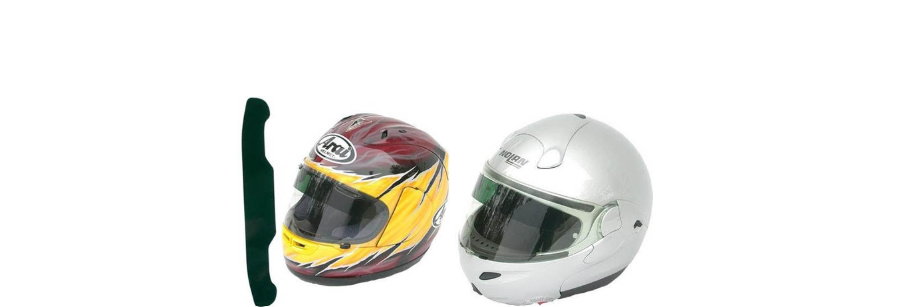
Many motorcycle safety discussions tend to center on crashes, protective gear, and worst-case scenarios. But smaller, everyday problems often get less attention, even though riders face them almost every day. Sun glare is one such overlooked rider concern. Riding into a low sun can leave these riders squinting, tilting their heads, or improvising their own fixes, from electrical tape on visors to cut film tucked into helmets. Many of these fixes are temporary, and few are designed specifically for the problem.
Riders may have learned to tolerate glare as part of riding but this can set in riders fatigue much faster. While common workarounds like tinted visors, drop-down shades, and sunglasses can help, they may not suit every helmet or every ride. Some riders may even shift position or wait for the road to turn, hoping to avoid glare.
Peter Harris, founder and developer of Helmet Sunblocker, created his product around this overlooked problem. He manufactures a thin, transferable sun-blocking film that fits inside a helmet’s face shield, adapted from an aviation material. The sunblocker fits above your line of sight so that it does not interfere with night vision or riding through tunnels. It’s always there when you need it and never in the way when you don’t. Riders have been discussing the product in online forums for over two decades. “Many riders tell me it solved a problem they had simply accepted for years,” Harris says.
Harris explains that he first used the material as a private pilot, placing it wherever the sun came through the cockpit. But the turning point came when he moved to the mountains and took up riding. He recalls the sun hitting him squarely in the face on a curve. “That experience made me wonder how anyone rode without some type of sunblocker,” he adds. “I used it personally for years before starting production, about 25 years ago. We’ve now sold well over tens of thousands.”
He cut strips of the film for his own helmet and gave some to his friends. Harris later approached the film’s manufacturer and arranged to buy it cut to his specifications. “I believed every rider needed one,” he notes. What began as a favor for friends gradually became its own product, reaching riders well beyond his circle.
In his view, the fix matters because of the way riders cope without it. He says riders “salute the sun,” trying to shade their eyes with one hand while riding into the glare. “One hand on the throttle and one blocking the sun isn’t safe,” he adds. “The film lets you see the sun without the glare.” He elaborates that he designed the film to sit inside the face shield so that wind and rain cannot shift it.
Harris also focuses on keeping things simple, be it the product or the business. “For a while, my son and I sold a wider range of motorcycle accessories through our website and a network of dealers,” Harris says. “But managing shipping, dealers, and customer service became more than what I wanted to take on.” Harris believes stepping back allowed him to concentrate on the one product riders kept asking about. “I would rather do one thing well than many things halfway,” he adds. “I now focus solely on the Sunblocker and sell it online.”
According to Harris, the film is designed with reusability in mind. Riders soften it in warm, soapy water before fitting it inside the shield, and it can be peeled off and moved when they buy a new helmet. He also offers versions cut for helmets with built-in brow vents, to ensure it fits around them. “Because it sits inside the shield, it works with almost any helmet fitted with a face shield, regardless of make or model,” he notes.
Harris’s story suggests that innovation does not always mean inventing new technology. Sometimes it means recognizing an existing solution belongs somewhere new, just like the material that worked in the cockpit was carried onto the road. For Harris, the appeal is clear. “It will spoil you. Once you ride with one, you may not want to ride without it.”