For decades, commercial insurance has functioned as a necessary expense, an operational safeguard businesses purchased reluctantly, renewed annually, and rarely viewed as a strategic asset. The industry itself has traditionally been defined by opaque compensation structures, limited transparency, and transactional relationships between broker and client.
Unitas Brokerage is positioning itself as a direct challenge to that legacy model.
Based in Northbrook, the firm has built its identity around a deceptively simple premise: businesses should have the opportunity to participate in the financial value generated by their own insurance programs. Rather than treating insurance purely as a sunk cost, Unitas has developed what it describes as a “Captive Insurance Brokerage” structure, one that introduces ownership and profit participation into the brokerage relationship itself.
At the center of the company’s proposition is a growing frustration many middle-market businesses feel toward traditional insurance procurement. Commercial clients often face rising premiums, fragmented service models, and compensation systems that remain difficult to decipher. Profit-sharing arrangements have long existed within the insurance industry, typically between carriers and brokerages, but those financial incentives have historically remained behind the curtain.
Unitas’ approach attempts to redistribute that dynamic.
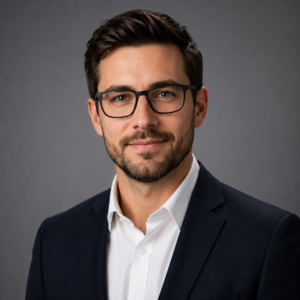
“Our model introduces ownership into the brokerage relationship,” says founder Kerry Martin. “Ownership leads to better clarity and more profitable outcomes.”
The distinction is more significant than it initially appears. Traditional captive insurance structures frequently require large capital commitments, regulatory complexity, and dedicated operational resources. Unitas says its brokerage structure removes those barriers. According to the firm, clients are not expected to contribute startup capital, possess insurance expertise, or dedicate manpower to the process. Instead, the company manages the brokerage infrastructure while clients participate in the economic upside created through the business relationship.
That positioning reflects a broader shift occurring across the commercial insurance sector, where companies increasingly expect service providers to deliver measurable strategic value rather than transactional administration alone. Businesses are scrutinizing broker relationships more carefully, especially as insurance costs continue to rise and risk environments become more complex.
Unitas has structured its business around the idea that alignment creates better outcomes.
Martin describes the company not simply as a broker, but as a “Risk Management General Contractor,” assembling specialized professionals tailored to a client’s particular operational exposures. Its teams combine brokerage services with market specialists, risk consultants, and operational support designed around the individual needs of each enterprise. The emphasis, throughout the firm’s messaging, is collaboration rather than standardized placement.
That client-specific philosophy is notable in an industry that has undergone years of consolidation. Large brokerage firms increasingly rely on scale, automation, and centralized servicing models. Unitas, by contrast, emphasizes customization and entrepreneurial responsiveness.
Martin repeatedly returns to the language of partnership: “We consult. We create. We execute. We deliver.”
The firm’s profit-sharing framework may ultimately prove to be its most disruptive feature. In conventional brokerage arrangements, contingent commissions and performance bonuses are generally tied to carrier profitability and brokerage volume metrics. Unitas instead frames profitability as something clients themselves should help capture.
Perhaps more unusually, the company has also introduced the concept of liquidity into insurance brokerage ownership. Through its model, participating businesses may eventually auction or liquidate their brokerage interests, creating what the firm describes as “liquidity on demand.”In effect, Unitas is attempting to transform an operational expense category into a transferable business asset.
That approach reflects a larger financialization trend occurring across corporate operations, where businesses increasingly seek to unlock dormant value from areas previously viewed only as cost centers.
The timing may also be advantageous. Commercial insurance buyers are operating in an era defined by cyber threats, supply chain instability, climate exposure, and heightened litigation risk. In that environment, companies are demanding greater transparency and more sophisticated risk strategies from their advisors. Traditional brokerage structures, critics argue, have not always evolved quickly enough to meet those expectations.
Unitas appears intent on filling that gap by combining advisory services with economic participation. The company’s vision is ambitious, but it also taps into a broader cultural shift occurring across professional services: clients no longer want vendors. They want aligned stakeholders.
Whether Unitas’ model becomes a larger industry movement remains to be seen. But its core thesis, that commercial insurance can evolve from a passive expense into an active financial strategy, speaks directly to the changing expectations of modern businesses.
In an industry often associated with complexity and inertia, Unitas Brokerage is making a distinctly contemporary argument: transparency, ownership, and shared value creation may no longer be optional differentiators. They may become the future of commercial insurance itself.