

More young people are competing for athletic opportunities than ever. The National Federation of State High School Associations reported that a record 8,266,244 participants competed in high school sports during the 2024–25 academic year. Yet the NCAA recorded 554,298 student-athletes across its three divisions that same year. Although not every high school participant aspires to compete in college, the difference illustrates how selective the next level remains.
Reaching that level also requires families to navigate a system shaped by transfer activity, social media, name, image, and likeness (NIL) opportunities, eligibility requirements, and sport-specific recruiting calendars. Each element can influence how an athlete communicates with programs and evaluates an opportunity. The growing number of decisions makes early education increasingly important.
Exposure represents only one part of that process. Attending numerous camps or showcases may appear productive, but each athlete has different abilities, academic credentials, and suitable collegiate levels. A family can spend considerable time pursuing visibility without first determining which programs present realistic academic and athletic possibilities.

The meaning of an offer can create further confusion. Verbal commitments, written offers of athletic aid, and admissions decisions carry different implications. The NCAA also explains that recruiting and signing requirements vary among prospective athletes and four-year transfers. Families therefore need enough knowledge to ask informed questions before treating any conversation as a settled opportunity.
Troy Esprit encountered these gaps during more than 25 years in coaching. He later founded Pro 7 Sports, a recruiting and student-athlete development organization that evaluates prospective college athletes and supports selected participants from high school through college. Esprit believes recruiting should begin with an honest assessment of an athlete’s current level and a practical plan for advancement.
“Every athlete has an individual path, so effective exposure begins with knowing where that athlete is academically and athletically,” Esprit says. “Once the family understands the appropriate level, the right programs and the areas that require development, each recruiting decision can become more purposeful.”
Esprit’s coaching experience also shaped his view that financial circumstances should not determine whether an athlete receives informed guidance. He argues that the wider recruiting system must consider families with limited resources, including those who cannot repeatedly pay for camps, showcases, and other attempts to attract attention. For him, accessibility begins with giving athletes clear, realistic information before families commit significant time or money.
Affordability alone cannot resolve every barrier to opportunity. Esprit believes schools can play a larger role by helping athletes and parents understand eligibility requirements, recruiting timelines, collegiate divisions, and communication with coaches before important deadlines arrive. Over the past three years, he has conducted recruiting seminars for athletes, families, and coaches, an experience that has reinforced his view that structured recruiting education should be more widely available in high schools.
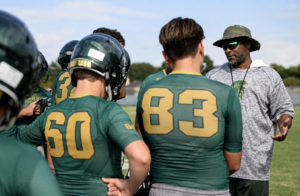
According to Esprit, effective seminars should walk families through eligibility requirements, recruiting calendars, collegiate divisions, and appropriate communication with coaches. Athletes should also learn how to assess their academic and athletic standing, identify suitable programs, and ask informed questions about campus life.
Esprit maintains that this education should continue beyond securing an offer. Understanding the academic workload, personal independence, and performance expectations awaiting athletes on campus can help them make more considered decisions about where they belong. It can also give families a clearer basis for evaluating recruiting advice and determining what kind of support an athlete genuinely needs.
“Getting an athlete to college is only the beginning,” Esprit says. “The larger responsibility is helping that young person communicate independently, manage academics, respond to adversity, and ultimately graduate with the tools needed for life after sports.”
Every recruiting cycle brings another group of families into a complicated process, while recent changes within college athletics continue to reshape the available routes. Talent may be widespread, but informed guidance remains unevenly distributed. Esprit believes progress will depend on treating recruiting as a long-term educational and developmental process that prepares athletes to succeed well beyond the day an offer arrives.

Other Articles