


Wine is the result of centuries of agricultural craft, careful winemaking, and thoughtful packaging, from embossed labels to hand-blown crystal stemware. According to the Wine Market Council, 31% of wine drinkers are now millennials, surpassing baby boomers at 26%, while over 40% now say wine makes occasions feel more special. Yet the moment a bottle reaches the table, the ritual often ends with a clumsy glug and a stray drop running down the bottle.
Traditional wine aeration has existed for thousands of years through oak barrels, wide-bottomed decanters, and simple tableside gadgets. Letting red wine breathe softens harsh tannins and opens up layered aromas, yet consumer sensory research reported by WineBusiness shows that only 11% of non-adopters said it was easy to predict the flavor of a wine, underscoring how intimidating traditional wine culture can feel to everyday buyers. Decanters take up counter space and require delicate brushes to clean, while bulky plastic spouts often prioritize function over grace.
For inventor Skip Lei, the founder of TRIbella, that gap between utility and aesthetics became the starting point for rethinking an everyday habit. As Silicon Valley Bank notes, the wine industry is moving through a multiyear demand correction; practical innovations that make wine more approachable matter more than ever. Drawing on more than 30 years in athletic footwear product creation, Lei approached wine accessories with a guiding principle that art and science should always work together to complete what he calls the circuit of beauty connecting the bottle, the pour, and the glass.
“I think if a wine glass is beautiful, and the wine is beautiful, why can’t the act of aeration and the pour itself be beautiful?” Lei says.
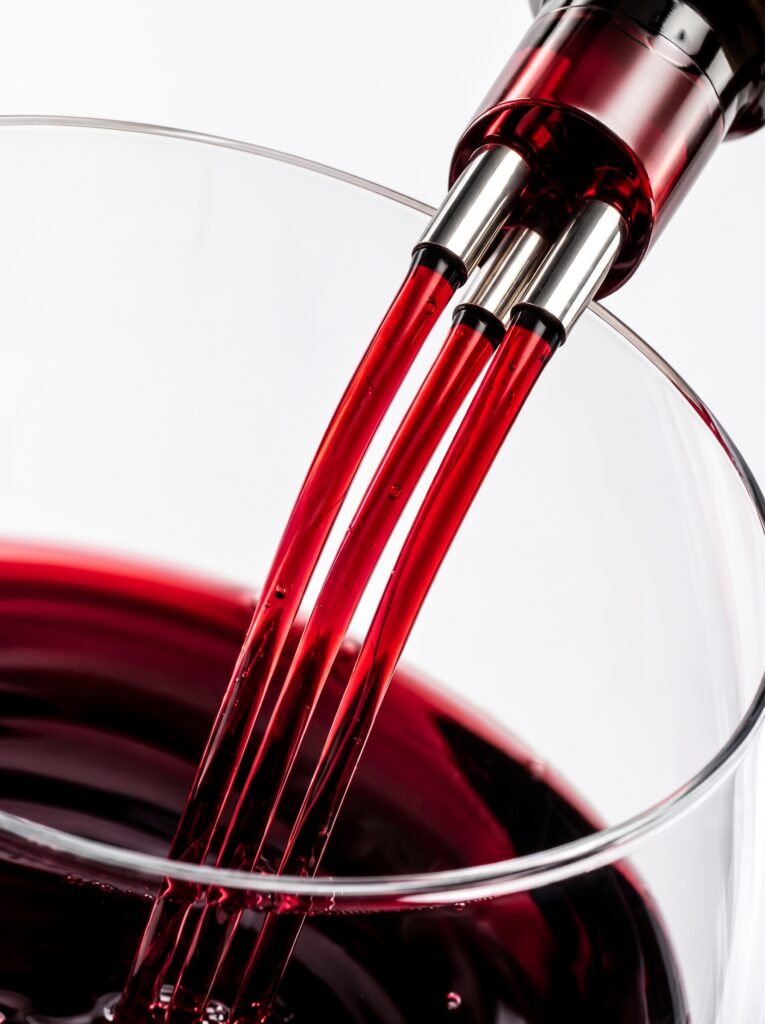
TRIbella’s patented multi-stream aerator divides wine into three distinct ribbons as it leaves the bottle. Ambient air circulates naturally between the separated streams, allowing the wine to breathe gently on its way into the glass without requiring advance decanting or complicated setup. A precision exit tube equalizes pressure inside the bottle, creating a smooth flow that stops cleanly without dripping onto tablecloths or wooden surfaces. When the evening ends, rinsing the compact device under warm water and tucking it into its protective, eyeglass-style case takes seconds.
Lei often points to a seven-second slow-motion video captured on his phone in the south of France as the clearest demonstration of the design. As the bottle tilts, three luminous streams weave through the air in unison, turning a routine kitchen task into a small visual centerpiece.
That sense of everyday accessibility is deliberate. Lei designed TRIbella specifically for ordinary wine drinkers rather than cellar collectors or sommeliers. Most people opening a bottle on a weeknight are pouring affordable everyday wine after work or sharing dinner with friends, not decanting rare vintages. By softening tannins on a moderately priced bottle and eliminating messy drips, the aerator brings a touch of ceremony to casual meals without pretense.
“You can pour your wine, toast, and chit-chat, or you can put a TRIbella in, pour it, make your inexpensive wine taste a little more expensive, and also have this beautiful moment,” Lei explains.
Meaningful product innovation does not always require reinventing an entire category from scratch. Often, the most lasting improvements come from noticing small points of friction in familiar routines and resolving them with simplicity. Throughout his career in product creation, Lei learned that high performance and visual appeal reinforce each other, yet the accessory itself should remain a supporting cast member rather than the star of the show.
Because the aerator is compact, reusable, and packaged in a protective travel case, it also solves a common social dilemma around gifting. Bringing a bottle of wine to a dinner party, housewarming, or colleague’s celebration often leaves guests guessing about price points and varietal preferences, whereas a reusable pourer works across countless bottles and gatherings.
“It’s just a great wine accessory,” Lei says. “You can just put it in your kitchen drawer; it stays protected. You could put it in your backpack if you’re going to your friend’s house, and it just enhances the moment of pouring wine.”
Wine already carries centuries of craftsmanship inside every bottle. By bringing elegance, ease, and a touch of delight to the final step before the first sip, TRIbella shows how thoughtful design can elevate even the simplest daily rituals.