

Most wildfires are contained, but a small number become catastrophic, turning into uncontrollable events that overwhelm emergency services and leave lasting economic damage. In January 2025, the Eaton and Palisades fires in Los Angeles County together destroyed more than 16,000 structures and killed 31 people, according to Los Angeles County. Closer to the Ventura River watershed, the 2017 Thomas Fire burned more than 281,000 acres across Ventura and Santa Barbara counties, CAL FIRE data shows.
The financial toll is also mounting. Insurers had paid more than $23.7 billion in claims from the 2025 Los Angeles wildfires as of March 2026, the California Department of Insurance reported. FAIR Plan, the state’s insurer of last resort for homeowners who cannot find private coverage, policies rose 146% between September 2022 and December 2025 to more than 668,000. These costs raise a question about whether current prevention strategies go far enough.
Catastrophic fires typically depend on three conditions: fuel, wind, and aridity. Most prevention today tends to focus on fuel reduction, hardening homes, and improving firefighting technology. Those measures matter, but once a fire becomes uncontrollable, they may not be enough. In densely built neighborhoods, a single burning home can ignite the next, creating structure-to-structure fires that fire departments may struggle to contain.
While wind cannot be controlled, aridity can be influenced. Land-use practices can gradually dry out many landscapes. A 2024 study published in Geophysical Research Letters analyzed 5,691 large U.S. wildfires and found that, in the West, soil and vegetation typically dried out rapidly in the months before ignition, creating conditions favorable for fire. That raises a practical question: What would it cost to rehydrate a watershed compared with fighting another catastrophic fire?
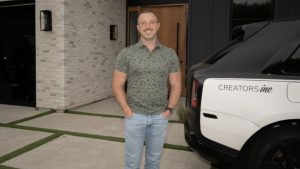
Christopher Danch, executive director of the Ojai Valley Fire Safe Council, says the council is working toward answering that question. The council, which works across California’s Ventura River watershed, is pursuing this through two pillars: landscape resilience and community resilience. It is working to restore natural water cycles through practices such as prescribed grazing, prescribed burning, and regenerative agriculture.
“We can’t do much about the wind, but aridity is where we have agency,” Danch explains. “A small change in moisture can slow how fast a fire spreads, and the rate of spread is directly related to how much damage it causes.”
Danch believes strong neighborhood relationships, community-level mitigation plans, and green buffer zones between homes and wildland can go a long way. The council plans around the watershed, home to about 50,000 people, rather than political boundaries. That approach recognizes that a fire starting in one jurisdiction can quickly threaten homes and land in another. “Fires don’t respect jurisdictional lines, and neither does water,” he notes. “It makes sense to plan around how the land and its resources actually work.”
According to Kalli O’Connor, co-executive director of the Ojai Valley Fire Safe Council, after two years of planning with the community, the council has applied for a $10 million grant to build two community resilience centers. The centers are designed to serve as both emergency preparedness hubs with supplies and a place for education, from water restoration to emergency go-bags. “People need to know they have agency,” she states. “When they prepare together, it reduces their anxiety and makes the whole community stronger.”
For Danch, the obstacle is a fragmented system. Political boundaries, property lines, and bureaucracy divide landscapes that function as a single system. Funding often prioritizes measurable outputs, such as acres treated, over long-term ecological outcomes, and permits for small restoration projects can take years. As a result, Danch adds, holistic restoration may struggle to move at the pace the risk demands.
In Danch’s view, technology alone may not solve a systemic problem. Changing how communities think about land, water, and shared resources could have a far greater effect. He says, “Communities around the world are already restoring landscapes, though their work rarely receives wide attention.” Those examples offer models other regions could learn from. Community-led restoration efforts, often involving large numbers of local volunteers, show what is possible when people treat a landscape as a shared responsibility.
Danch encourages governments, funders, researchers, and communities to rethink how wildfire prevention is defined and funded. “Communities have more power than they may realize when they work together to restore their landscapes,” he remarks. Preparation requires investment, but its cost may be far smaller than the cost of rebuilding after the next catastrophic fire. Wildfire resilience begins long before the flames, with restoring the natural systems that sustain the places people call home.