


Because a home is often a family’s largest financial asset, preserving its value is essential amid shifting property markets and material costs. According to Harvard’s Joint Center for Housing Studies, annual U.S. homeowner spending on improvements and maintenance is projected to reach $518 billion by the end of 2026, underscoring the vital role of upkeep despite economic pressures. For homeowners making these investments, choosing an experienced exterior renovation contractor is critical to protecting the property’s long-term functionality and financial value.
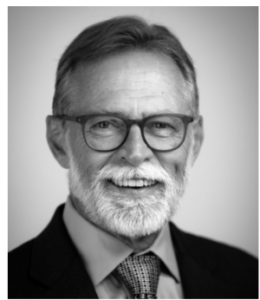
In Central Pennsylvania, Easy Siders Home Improvements has spent five decades working with homeowners on exterior improvement projects. Established in 1974, the company entered a new chapter in 2024 when Kevin Myers acquired the business. His familiarity with construction, property rehabilitation, and business management provided a foundation for his leadership. A Lancaster County native with an electrical engineering degree, Myers previously spent years in corporate sales and management while pursuing residential property rehabilitation and rental investments beginning in 2002.
His acquisition brought an opportunity to build upon the company’s established reputation while introducing operational changes suited to its next stage. The guiding principle is reflected in Easy Siders’ mission to enhance homeowners’ quality of life through improvements to curb appeal, weather protection, and energy efficiency. For Myers, this mission also involves recognizing the financial and personal significance of each property.
“We’re not just here to put a temporary fix on somebody’s house. The work we do should contribute to the value of the property, protect the homeowner’s investment, and give people something they can take pride in,” Myers explains.
That philosophy informs the company’s range of services, which includes siding, roofing, windows, doors, gutters, and sunrooms. Serving Dauphin, Cumberland, Lancaster, York, and Lebanon counties, Easy Siders works with homeowners to identify suitable products, establish project budgets, and plan installations. Its process also accounts for preparation work, including demolition, site protection, and weatherproofing, which Myers regards as important considerations in achieving a durable finished project.
Building on Easy Siders’ five-decade history, Myers has introduced new systems to support the company’s continued development. When he acquired the business, its established practices included handwritten carbon-copy contracts and a typewriter, reflecting the methods that had served the company over the years.
Myers drew on his corporate management experience to introduce email communication, customer relationship management software, electronic contracts, digital calendars, and expanded photographic documentation. These systems can support more organized scheduling, project records, and communication between employees and customers. However, gaining employee participation required particular attention.
“Implementing a new system is usually the easy part. Getting people to understand the vision, see the value in it, and become part of that change is where the real work happens,” Myers says.
The operational changes also extend to workforce planning. For exterior contractors, seasonal demand can influence scheduling, staffing, and project availability. Myers is working toward more consistent lead generation through marketing while considering an expanded in-house siding workforce. Easy Siders already uses internal crews for windows and doors, and developing dedicated siding teams may provide additional opportunities for quality oversight and workforce continuity. Subcontractors can continue supporting periods of higher demand.
These decisions reflect Myers’ preference for building a business recognized for its workmanship and customer relationships. His ambitions for Easy Siders are tied to the reputation it develops throughout its Pennsylvania service area, with craftsmanship and customer satisfaction informing decisions about growth. For homeowners investing in roofing, siding, or replacement windows, installation quality and preparation can influence the performance and useful life of those improvements.
This emphasis on workmanship also brings attention to a significant challenge facing the construction sector: the availability of skilled labor. Myers says, “I see recruitment and development of younger tradespeople as an important concern, particularly as experienced workers approach retirement with decades of practical knowledge.” He notes that much of that expertise has traditionally been passed between workers through hands-on instruction, creating a need for more structured training as new employees enter the field.
Educational perceptions also influence the talent pipeline. Myers observes that younger generations have often been encouraged to pursue four-year degrees, while vocational careers receive less attention. Even among trade education programs, exterior renovation specialties such as siding and window installation may receive less visibility than electrical, plumbing, and HVAC training.
For Easy Siders, addressing this opportunity involves developing a workplace that can appeal to younger, technology-familiar workers. Digital systems, documented procedures, and internal training practices may help new employees understand project expectations while learning the practical skills required for exterior renovations. Myers sees employee development as an investment in the company’s future craftsmanship and its capacity to serve homeowners over time.
He hopes to double the organization’s size while developing a systematized operation with defined responsibilities, established processes, and leadership capacity that can function independently of its owner. Such a structure may also provide room for employees to develop professionally and contribute to the company’s continued development.
“I want Easy Siders to be a premier, highly respected, and high-quality contractor in our region of Pennsylvania,” Myers remarks. As the company builds upon its extensive history, its next chapter involves connecting that legacy with the needs of today’s homeowners and tomorrow’s workforce.