


Medical technology is not like other industries. When a diagnostic analyzer fails, a patient waits. When an imaging system goes down, procedures are delayed, and clinicians work around a gap. The equipment exists to serve care, and the service model behind it carries the same responsibility. That is what makes the industry’s continued reliance on field visits a problem worth examining.
The industry is beginning to codify that responsibility. In September 2026, the International Organization for Standardization published a technical specification for remote maintenance services of medical devices and medical information systems. The standard specifies the risk assessment necessary to protect remote maintenance activities, taking into consideration the special characteristics of the healthcare field such as patient safety, regulations, and privacy protections. The standard exists because remote support is no longer a peripheral option. It is part of how medical technology is maintained.
The stakes are not theoretical. In August 2026, according to the Central Alerting System, a National Patient Safety Alert was issued for certain ventilators after an internal component was found to cause unexpected interruption of ventilation therapy. The alert states that once the fault occurs, the ventilator becomes inoperable and cannot be restarted, and that interruption of ventilation may result in serious injury or death if an alternative means of ventilation is not immediately available. That is the standard the service model has to meet. It’s not convenience and not cost. It’s patient safety.
Downtime is not only a technical failure. A National Library of Medicine peer-reviewed study of critical care equipment in a tertiary hospital found that the main reasons were weak contract management, poor record-keeping, and inadequate coordination within the stores, with older syringe infusion pumps experiencing downtime of more than 50% due to age and difficulty in obtaining spare parts. The paper also states that approximately 40% of observed problems could be resolved through staff training. The problem is often organizational. The equipment works. The system around it does not.
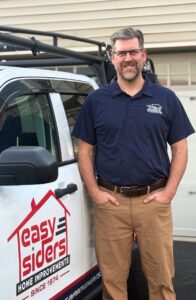
Ari Sihvonen has spent more than 30 years in medical technology. He is the founder of Sihvonen Solutions AB, a Swedish firm that services medical technology equipment for healthcare suppliers and helps them improve their service and support organizations. In the early 2000s, he helped establish a Nordic help desk in Stockholm. By his account, the team resolved up to 70% of technical issues over the phone, without an engineer visiting the site. He considers it one of the most significant achievements of his career.
The help desk worked because it was not a call center. “The support organizations are built around a call center that then dispatches the assignments to the field,” Sihvonen says. “The field personnel have to be careful departing on customer visits based on that information. It is always better to make one phone call extra to be sure.” The distinction matters. A dispatch system that lacks technical knowledge sends engineers to sites without knowing whether the visit is necessary, or what the engineer will need when they arrive. A help desk staffed by people who understand the equipment resolves the issue at the first contact or sends the engineer with the right information.
The benefits extend beyond the customer. A field engineer who is moving between emergency calls cannot focus on the one in front of them. The phone rings. The next site is waiting. The quality of the work suffers, and so does the person doing it. A help desk gives the engineer somewhere to turn, and it gives the customer a direct line to someone who knows what they are talking about. Sihvonen describes the help desk as a support structure that protects three groups: the customer, the engineer, and ultimately the patient.
Technology has made remote support more achievable than it was when Sihvonen built his help desk. Remote service software allows engineers to connect directly to equipment and review logs. Simulation software lets an engineer sit with the analyzer interface and guide the customer through the same screens. Interactive video tools allow a technician to point at a component on the customer’s screen, so the customer can see exactly where to look. The tools are better. The principle is the same.
But technology is not the whole answer, and Sihvonen is careful about where the line sits. Not every issue should be resolved remotely. An engineer has to judge the customer’s technical ability, the complexity of the fault, and the risk of guiding someone through a repair they cannot safely complete. Customer safety comes first, and that means knowing when to stop troubleshooting over the phone and send someone to the site. Remote support is not about eliminating field engineers. It is about using their expertise where it matters most.
What Sihvonen finds harder to accept is how often systems that work are abandoned. The Nordic help desk he helped build lost momentum after management changes, reorganizations, and a corporate acquisition. The system was diluted. The people who understood it moved on or were overruled. “Even things which work,” he says. “I never let go of this, because this is a big success in the story of my working life.”
The lesson is not that companies should never change. It is that operational decisions have consequences for the people delivering the service and the patients receiving it. When a help desk is working, the decision to restructure it should be made with those outcomes in mind, not by people too far from the work to see what they are giving up.
Medical technology companies measure service performance in visits completed and tickets closed. A better measure would ask whether the patient got the care they needed, whether the engineer had the time to do the job properly, and whether the system that made both possible is still intact. Remote support is not a cost-saving tactic. It is a way of building a service model that takes the industry’s responsibility seriously.