


Teenagers today are growing up surrounded by screens and, increasingly, artificial intelligence. According to the Pew Research Center, 40% of U.S. teenagers say they are online almost constantly, compared with 24% a decade ago. The same survey found that 64% have used an AI chatbot, with approximately three in 10 using one daily. Although many young people remain closely connected to their devices, they can sometimes feel less connected to the people, experiences, and histories within their own communities.
Discussions about teenagers and AI frequently centre on shortcuts, distractions, and academic dishonesty. According to Pew, 54% of teenagers now use chatbots to assist with schoolwork. However, these technologies can also support digital oral history projects, helping young people record and preserve the experiences of older generations. The bigger question is whether technology will create greater distance between young people and their communities or provide new opportunities to bring them closer together.
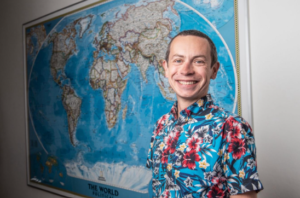
Cristina Whitlow, a film producer with more than 20 years of industry experience, works with teenagers through filmmaking mentorship and helps organizations communicate their stories effectively. She founded and leads Ambassador Arts Academy, an Atlanta-based nonprofit, serves as CEO of an entertainment and storytelling consultancy, and is currently writing a book about impact storytelling. “Young people are already using AI, so we can’t pretend it isn’t there,” Whitlow says. “We have to address it head-on and show them there’s another way to use it.”
Whitlow moved from California to Atlanta during a period when Georgia’s film industry was experiencing significant growth. From her perspective, the Los Angeles industry operated in a more transactional way, whereas Atlanta offered a stronger sense of community and collaboration. She soon noticed that many local crew members lacked the training required to meet industry standards. On production sets, she encountered people who were unfamiliar with basic responsibilities and observed that local workers were frequently overlooked in favour of crews brought in from other states. “I kept thinking, these people need to be trained,” Whitlow says. “Why not start with young people, so they’re ready when the industry needs them?”
Recognizing this opportunity, Whitlow established a two-week summer filmmaking camp for middle and high school students. The programme uses a three-part storytelling framework, while also giving participants opportunities to visit active studio sets and experience professional productions firsthand. She began with something teenagers already use every day: their phones. Students learn to produce documentaries using mobile devices, multi-camera arrangements, and tripods. “Everyone said the phone was the distraction,” Whitlow says. “I wanted them to see that if you pick it up with purpose, you can actually create something.”
Whitlow recalls that the camp’s first year took place shortly after COVID, when many students were still experiencing anxiety and social isolation. One participant initially found it difficult even to leave the car, but by the end of the week had become comfortable speaking openly with adults, according to Whitlow and the student’s parents. Counsellors are also informally available throughout the programme because personal storytelling can sometimes bring difficult emotions to the surface. “These aren’t scripted stories. They’re real,” Whitlow says. “When young people open up about something that hurt them, they need support right there.”

Whitlow’s book, How to Create a Story of Impact, is scheduled to launch on November 28, 2026. It builds on the storytelling framework she teaches students, adapting its principles for entrepreneurs, business founders, and organizations. A shorter booklet designed specifically for young people is also in development. Her 2027 camp will focus on the theme “Youth, AI, and cultural preservation.” An AI voice technology company is contributing credits to help students record and preserve stories from older community members that might otherwise remain undocumented. Students applying for scholarships must submit a short video explaining their reasons for wanting to participate. “I’m looking for genuine desire, not experience,” she adds.
Whitlow emphasizes that artificial intelligence should never replace a student’s ability to think independently or develop their own writing skills. As AI-generated material becomes more common, she believes original voices and authentic experiences will become even more important. She is also working towards creating studio internship opportunities for students and developing impact storytelling projects with studios, which she says are becoming more receptive to independent filmmakers. “People are going to look for what’s real,” Whitlow says. “Human connection is the thing that will be elevated.”
For Whitlow, smartphones and artificial intelligence do not have to distance teenagers from the world around them. With the right guidance, structure, and mentorship, these technologies can become valuable tools for helping a younger generation document the experiences and memories of their communities. In doing so, they create meaningful connections between older generations whose stories deserve to be preserved and young people learning how to bring those stories to life.