
America’s workforce shortage is entering a new phase, with businesses now competing less for customers or market share and more for skilled people. A new 2026 report estimates the U.S. economy is operating with an annual shortage of roughly 140,000 skilled technicians, while transportation industries alone will require more than 1.2 million new professionals by 2031. Collision repair remains one of the sectors facing the greatest pressure, with demand expected to exceed 73,000 additional technicians over the next four years.
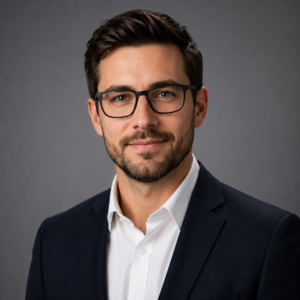
Salvador Vega, founder of Fox Auto Services and The G.R.I.T Foundation, believes those figures reveal a leadership challenge just as much as a labor shortage.
“The conversation keeps revolving around hiring,” says Vega. “Everybody is trying to hire somebody who already knows everything. Very few people are asking who is going to develop the next generation.”
From his perspective, many organizations have gradually shifted workforce development away from leadership and toward recruitment, creating a cycle where experienced employees simply move from one company to another while the overall talent pool remains largely unchanged. Every successful hire fills one vacancy while creating another elsewhere, leaving industries chasing short-term solutions instead of building long-term capacity.
Years of managing collision repair facilities helped shape that perspective. Before starting his own business, Vega observed experienced employees joining organizations only to receive very little guidance once they were hired.
“As soon as somebody got hired, the owner disappeared. They handed over responsibilities and expected everything to work. Leadership stopped after the interview,” he explains.
Those experiences became the foundation for the culture he later built at Fox Auto Services. While technical ability remains critical, Vega believes experience alone is rarely the best predictor of whether someone will strengthen an organization. Employees often bring workplace habits from previous employers, making it challenging to establish new systems and shared expectations. In his view, culture is built long before productivity reaches its highest level.
“I use the word ‘we’ far more than ‘I.’ People don’t build ownership because somebody tells them to. They build ownership because they see it being practiced every day,” he explains.
That philosophy has gradually reshaped his hiring priorities, with greater emphasis on identifying people who are willing to learn, adapt, and contribute to a shared mission. Above all, curiosity consistently stands out.
“Skills come through repetition,” he says. “Curiosity is what keeps somebody asking what they’re capable of learning next. Once somebody stops asking that question, growth slows down.”
His leadership philosophy also reflects his own journey after arriving in the United States as a young immigrant with limited opportunities and no established career. The people who invested time in teaching and mentoring him left a lasting impression, reinforcing his belief that opportunity often comes before experience. Those lessons continue to guide the way he leads today.
“My goal has never been recognition,” Vega says. “What matters to me is helping somebody else see a path that maybe they couldn’t see before.”
That belief eventually inspired the creation of The G.R.I.T Foundation, a nonprofit dedicated to supporting students from low-income households and immigrant communities.
While automotive education remains an important part of the program, Vega intentionally expanded its focus to introduce young people to financial literacy, banking, insurance, real estate, entrepreneurship, and practical life skills alongside mentorship from local professionals. His goal is to broaden their understanding of career possibilities before they leave school.
School visits have become a central part of that mission. Rather than immediately recruiting students, Vega encourages them to observe, ask questions, and discover what genuinely interests them. Those who remain engaged often progress into shadowing opportunities that provide a realistic view of the workplace rather than an idealized one.
“I want them to experience what work actually feels like. Curiosity tells me somebody is paying attention. Once that spark exists, everything else can be taught,” he explains.
Vega believes many employers underestimate how much influence their own leadership has on workforce development. Companies frequently invest significant resources in recruitment strategies, consultants, and onboarding programs while overlooking the daily example set by managers and business owners.
“You have to invest in yourself first,” he says. “If you want people to grow, they need somebody worth following. Young people learn from what leaders do every day, not from a presentation somebody gives once a month.”
Although his work has primarily focused on the automotive industry, Vega sees no reason why the same philosophy cannot apply across other sectors. Every industry struggling with talent shortages ultimately faces the same decision: whether leadership is about filling vacancies as quickly as possible or creating an environment where inexperienced individuals can steadily develop into experts. While the second approach requires greater patience, he believes it delivers far greater long-term value by expanding the workforce instead of simply redistributing it.
While America’s workforce challenges are often discussed through economic forecasts and demographic trends, Vega believes another factor deserves equal attention: the willingness of leaders to invest their own time in developing people before experience ever appears on a résumé.
His guiding principle remains unchanged:
“Change the future by avoiding the mistakes of the past.”
If more organizations embraced leadership as a responsibility to cultivate potential rather than continually searching for fully developed talent, today’s labor shortage could become tomorrow’s opportunity.