
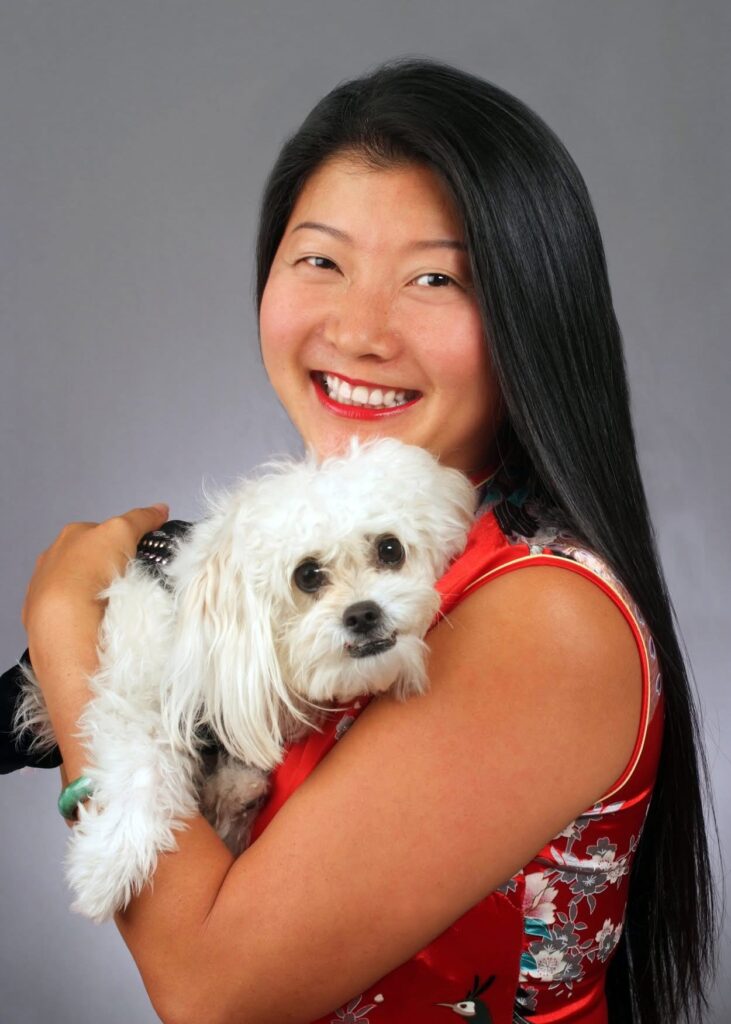
Siew Tan spent eleven years in Silicon Valley before building TanKoi, a platform connected to wellness and traditional practices. She worked in enterprise technology, holding roles at large American corporations. She held two degrees in business marketing and in sales management, and computer studies. By any conventional measure, the first career was working.
Her body disagreed.
Tan grew up on a farm in Malaysia, in a fourth-generation Malaysian Chinese family with roots in traditional Chinese medicine. Her parents worked at a chicken and egg farm and a rubber plantation. They did not finish high school. Her early years were spent around organic food and health-conscious living.
She left that world for a different one. She graduated, moved to the United States at 18 years old, and entered the technology industry at the height of the dot-com era. The work was demanding. The ladder was steep. She climbed it.
After eleven years, her health broke down. The stress and the workload had accumulated in ways she had not tracked. She describes the period as one in which she did not eat well and not balancing her life.
“I was a high achiever,” Tan says. “I kept working. I did not pay attention to my health.”
The breaking point was not physical alone. Her grandfather died. Her grandmother died. She was unable to travel back for either funeral. Her immigration status at the time kept her in the United States.
Then her mother had a stroke in Malaysia. Tan went back to care for her. The experience put her face to face with what serious illness does to a person and to a family.
“My mother told me something I have never forgotten,” Tan says. “Your health is more important than your wealth.”
She left the corporate world. She moved to Laguna Beach, California, fifteen years ago. She describes the decision as a spiritual calling rather than a career move. The ocean, the artistic community, and a different pace of life, she says, gave her the room to heal.
Tan speaks about the long history of traditional herbs and the role they can play in a person’s health. She does not position natural approaches against medical ones. She frames the decision as a personal choice.
Tan says, “People have a choice, they can work with a doctor. They can explore holistic approaches. They can combine the two. What matters is that the choice belongs to them.”
Her larger message is about where wellbeing starts. She argues that health, happiness, and positivity are a form of wealth, and that no one else can carry responsibility for a person’s life. Pain and stress, in her view, are often self-created and require reflection before they can be resolved.
“Your health is your wealth,” Tan says. “Your happiness is your wealth. Your positivity is your wealth. Nobody is responsible for your life except you.”
That message extends beyond the individual. Tan speaks about conflict, displacement, environmental damage, and animal welfare. She points to her own family history. Her great-grandfather and grandmother fled war. Her grandmother carried the memory of bombings and the effort to protect her children. Tan says those stories shaped her view that peace is not an abstraction.
Art is part of her work. She connects artists and ideas around themes of peace, positivity and happiness. Ocean imagery runs through much of it, drawn from the environment that shaped her recovery. She describes art as a form of medicine, capable of speaking to people in ways that language does not.
She does not tell people to follow her path. She says they should find their own. Her argument is that wellbeing begins inside the individual, and that a healthier world starts with people taking responsibility for their own choices, their own relationships, and their own conduct.
The first career gave her a title. The second gave her a life.